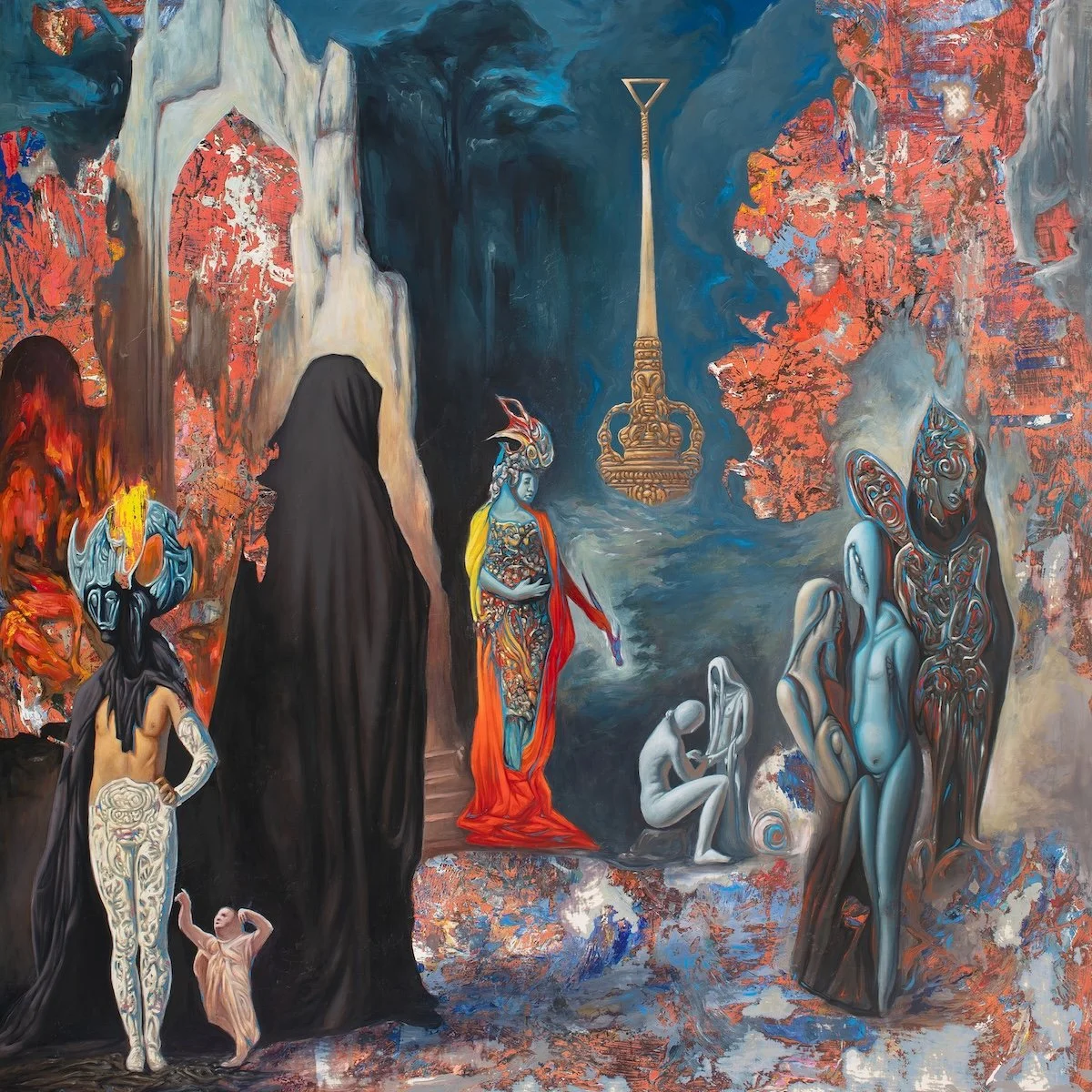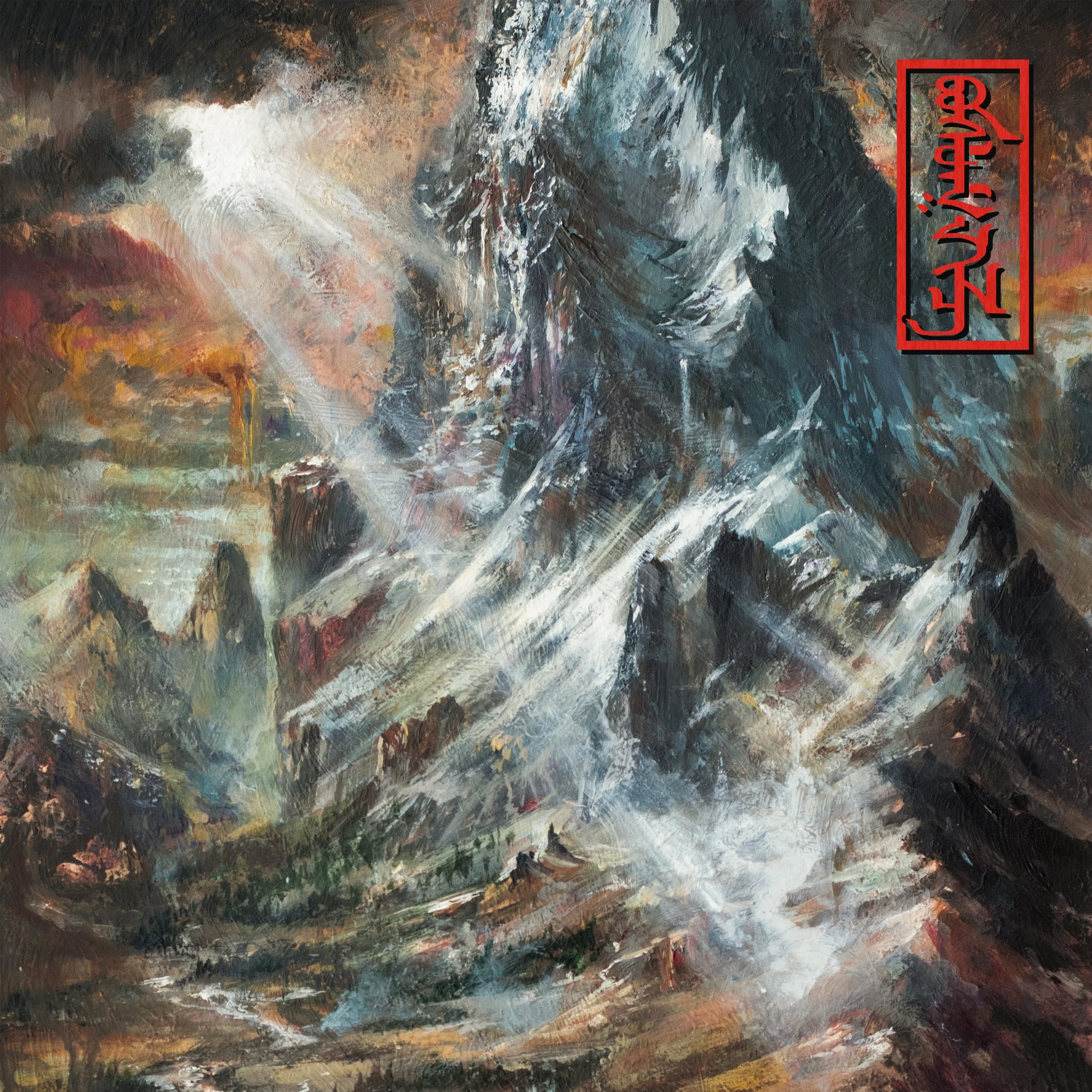

Over the last decade, Chicago quartet REZN have carved out a unique place in the landscape of heavy music, chiseling away at the crude formations of the topography, mining the most concentrated metallic ore from the dirt, and shaping it all into something monumental, imposing, and divine. While REZN has always fused seismic riffs with effortless beauty and grandeur, their shifting strategies for wielding that polarity have involved varied compositional and stylistic decisions, most notably the light-and-dark contrast of companion albums Solace (2023) and Burden (2024). But with their newest full-length offering, Cycles in the Infinite Dream, REZN masterfully harness the oppressive weight of their full sonic armory to celestial melodies and sublime synesthesia-inducing atmospherics in a manner so seamless it feels otherworldly, as if occupying a liminal space between two realities.
While REZN traffic in the unbridled realms of metal and untethered reaches of psychedelia, their latest release showcases a band working with discipline and intention, even when those intentions are rendered to be purposefully cryptic. As the album title implies, Cycles in the Infinite Dream explores the nexus of our waking and nocturnal worlds. “We moved towards the dream and subconscious state as a lyrical concept and melodic theme,” the band explains. “The pseudo-waking state is a reflection of a second existence—something that you can flee to or be imprisoned by.” Much like the subconscious-guided work of David Lynch, Cycles in the Infinite Dream exists as parallax between the artist and the audience, creating an obscured and distorted space that is both familiar and alien, like a corridor into our past where we recognize our surroundings but somehow still feel lost within its warped geometry.

One of REZN’s most understated assets lies within guitarist/singer Rob McWilliams’ vocal approach. Eschewing heavy music’s guttural growls or operatic gymnastics, McWilliams has been steadfast in his soaring, delay-drenched melodies, providing a beguiling path through even the most primal and pummeling moments in the band’s repertoire. Like a piper calling you to join him, McWilliams forges through the darkness yet remains cloaked in mystery. Indeed, the voice serves more as an instrument and a guidepost than as a vehicle for poetry or a portrait of a personality. “Most of the instrumentation was created with vocal melodies in mind,” the band clarifies. “We made a lot of choices that were dictated by the vocals, sometimes rewriting songs completely if the vocal melodies demanded it.”
That said, this is not a vocal-forward album, as is immediately made clear with the opening track “Rites of Passage,” where we are treated to the Tangerine Dream-like synth tapestries of multi-instrumentalist Spencer Ouellette before the hammer falls in the combined force of McWilliams’ bottom-heavy guitar, Phil Cangelosi’s full-bodied bass, and Patrick Dunn’s stomping drum patterns. It’s a decadent indulgence in both the lizard-brain craving for big riffs and the audiophile’s thirst for dimension and aura. “We wanted to go for a barreling, rolling feel between the rhythm and lead, so this one felt perfect for emphasizing those elements while giving you a glimpse into the rest of the album,” McWilliams states. “The end payoff is the epitome of that feeling, just letting it ride with a thousand-pound drone to send you off on the journey.”
The album segues into “Transient,” where REZN masterfully chugs and churns on a 7/4 beat, employing the odd time signature as a strange vehicle leading you to secret doors and hidden rooms. And what better way to cap off a prog rock rhythm than to throw in a King Crimson-esque saxophone solo, courtesy of Ouellette? From there, the band leads us into “Cloudfall,” a gripping rumination on sleep paralysis and its feedback loop of false awakenings. Thematically, “Cloudfall” perhaps best exemplifies the album’s examinations of cycles and dream states, evoking the nebulous and unsettling between-worlds of our consciousness while employing repeating motifs and resurfacing patterns. The song also showcases a new tool in REZN’s trade: Ouellette’s lap steel guitar. The instrument conjures the extraterrestrial weightlessness of the pedal steel guitar featured on Brian Eno’s Apollo: Atmospheres and Soundtracks album, providing a similar bridge between cosmic ambience and the wide-open terrains of Western music. This tactic continues through “Aerial Birth,” where Cangelosi’s roiling basslines provide the counterweight to Ouellette’s helium-grade lap steel before thick slabs of distortion and Dunn’s rhythmic battery pull everything back to a gravitational center. Side A closes with the pastoral instrumental track “Devotion,” supplemented with a blissful string arrangement provided by Chicago musicians Natalie Frakes and Ómkara Gil.
The second half of Cycles in the Infinite Dream kicks off with “The Vessel,” a track that conjures the effortless pairing of meaty riffs and snake-charmer vocals one typically associates with masters like Mastodon, Alice in Chains, or Deftones. Each section flows seamlessly into the next, and the lyrical themes of cycles and regeneration give you a sense that the song could keep repeating forever if it weren’t for the sharp turn towards a dead end in its final moments. Juxtapositions continue to drive the back end of the album, with “Escher” somehow simultaneously providing a dusty Americana vibe while also giving the distinctly ‘90s loud / quiet / loud dynamism that made albums like In Utero so exciting. That sonic similarity may stem from the album being recorded in the same room as Nirvana’s swansong—the venerated Electrical Audio in Chicago, courtesy of one of the studio’s founders, Greg Norman.
The penultimate track “Primal Thread” serves as a Trojan horse, where the first three minutes offer up hopeful optimism before the song descends into crushing despair with the album’s gnarliest troglodyte-grade beatdown. The album concludes with “Terra Preta,” a finale that taps into the woozy dream-state ecstasy of early ‘70s Pink Floyd before swaddling the listener with down-tuned walls of distortion. “When the end comes, you look back on who you were at the beginning like it’s a different person altogether,” the band says of the album’s climax. “All of these feelings are just individual fragments of realization, but they are all part of the recurring cycles within an endless reality that we all experience as both people and animals in the world, resonating within all of us as if we are just playing our part in an infinite dream.”
REZN have long operated—and thrived—in the subterranean realm of music heads who crave the aural equivalent of altered states. And with Cycles in the Infinite Dream, they have created their most psychotropic work to date.
— Written by Brian Cook